Cheque Bounce:
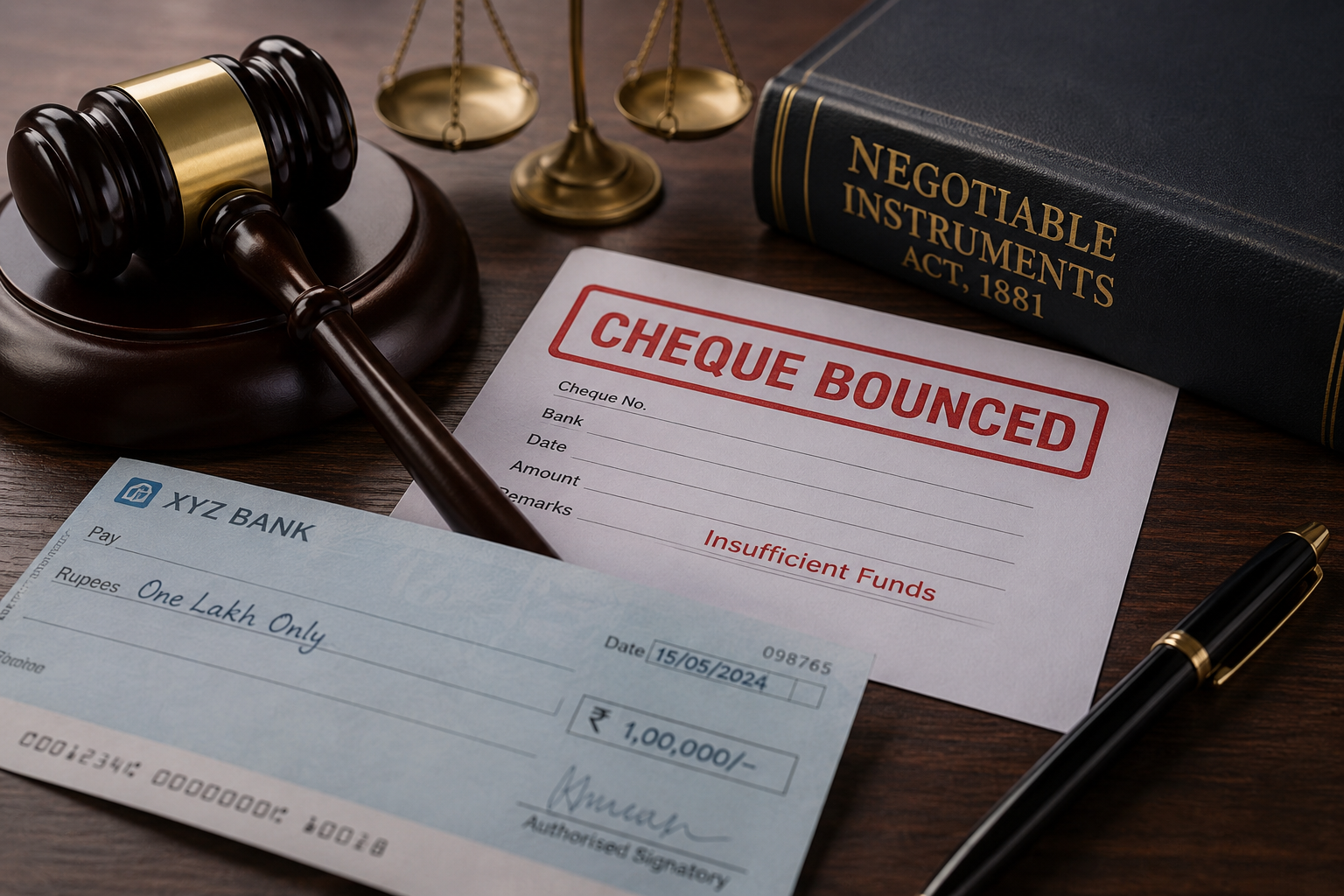
A cheque is one of the most commonly used instruments for making payments in business and personal transactions. It provides a convenient way to transfer money without requiring immediate cash payment. However, when a cheque is presented to the bank and is returned unpaid, the situation can become legally and financially complicated. A cheque bounce generally occurs when the bank dishonours a cheque due to reasons such as insufficient funds, account-related issues, signature mismatch, or other banking irregularities. In India, cheque dishonour can attract legal consequences, particularly when the conditions prescribed under Section 138 of the Negotiable Instruments Act, 1881 are fulfilled.
What Is a Cheque Bounce?
A cheque bounce means that a cheque issued by a person or business has been returned unpaid by the bank. The bank generally provides a return memo stating the reason for dishonour. Common reasons include insufficient balance, payment stopped by the drawer, account closure, signature mismatch, or exceeding an applicable banking limit.
Not every dishonoured cheque automatically results in criminal liability. For a case under Section 138 of the Negotiable Instruments Act, certain statutory requirements must be satisfied. Therefore, understanding the legal procedure and applicable timelines is extremely important for both the cheque issuer and the cheque holder.
Common Reasons for Cheque Dishonour
There can be several reasons why a bank may return a cheque unpaid. One of the most common reasons is insufficient funds in the drawer’s account. If the available balance is inadequate to cover the cheque amount, the bank may return the cheque unpaid.
Other reasons may include closure of the bank account, instructions to stop payment, signature discrepancies, alteration in the cheque, incorrect account details, or technical banking issues. The exact reason mentioned in the bank’s return memo can be important when determining the appropriate legal course of action.
Section 138 of the Negotiable Instruments Act
Section 138 of the Negotiable Instruments Act, 1881 deals with the dishonour of cheques for insufficiency of funds or where the amount exceeds the arrangement made with the bank.
Generally, where a cheque is issued towards a legally enforceable debt or liability and is returned unpaid for a reason covered by the provision, the payee may initiate legal proceedings after complying with the prescribed statutory requirements.
The law is intended to promote confidence in cheque-based transactions and provide a legal remedy when a cheque issued towards a legally enforceable obligation is dishonoured.
Importance of a Legally Enforceable Debt
One of the important aspects of a cheque bounce case is the existence of a legally enforceable debt or liability. A cheque may be issued for various purposes, but proceedings under Section 138 require the statutory conditions to be established.
Proper documentation can therefore play an important role. Agreements, invoices, receipts, account statements, correspondence, payment records, and other relevant documents may help demonstrate the underlying transaction and liability.
Legal Notice After Cheque Bounce
When the cheque is dishonoured, the payee generally needs to take timely action. The bank’s return memo serves as an important document because it records the date and reason for dishonour.
Under the statutory framework, the payee is required to issue a written demand notice to the drawer within the prescribed period after receiving information regarding the dishonour of the cheque. The notice demands payment of the cheque amount.
If the drawer makes the payment within the statutory period after receiving the notice, the matter may be resolved without proceeding further under Section 138. If payment is not made within the prescribed period, the payee may have the right to initiate a complaint before the appropriate court, subject to the applicable limitation requirements.
Why Timely Action Matters
Cheque bounce matters involve specific statutory timelines. Missing an important deadline can adversely affect the ability to pursue the statutory remedy.
For this reason, the cheque holder should preserve the original cheque, bank return memo, transaction documents, legal notice, proof of dispatch or delivery, and other relevant correspondence. Taking legal advice promptly after receiving the dishonour memo can help ensure that the necessary steps are taken within the applicable time limits.
Defences in Cheque Bounce Cases
A person facing a cheque bounce complaint may have several legal defences depending on the facts and circumstances. The defence may involve disputing the existence of a legally enforceable debt, questioning the circumstances in which the cheque was issued, challenging the statutory requirements, or presenting evidence relating to payment or settlement.
The exact defence depends upon the transaction, documents, communications between the parties, and evidence available on record. Therefore, every cheque bounce case needs to be assessed individually rather than relying on a general defence.
Cheque Bounce in Business Transactions
Cheque dishonour can create serious difficulties for businesses. Suppliers may issue cheques for purchases, customers may provide post-dated cheques, and companies may use cheques for various commercial obligations. When such cheques are dishonoured, the resulting dispute can affect cash flow, commercial relationships, and business operations.
Businesses should maintain proper records of invoices, purchase orders, agreements, delivery documents, payment confirmations, and correspondence. Proper documentation can make it easier to establish the nature of a transaction if a payment dispute later arises.
Role of a Lawyer in Cheque Bounce Matters
A lawyer experienced in cheque bounce matters can assist with reviewing the transaction, examining the bank return memo, preparing the statutory demand notice, assessing limitation periods, preparing the complaint, and representing the client during legal proceedings.
Legal assistance can also be valuable for individuals who have received a cheque bounce notice. The recipient should not ignore the notice, as failing to respond appropriately may have legal consequences. A lawyer can examine the allegations, available documents, payment history, and potential defences before advising on the next course of action.
Settlement of Cheque Bounce Cases
Many cheque dishonour disputes may also be resolved through negotiation or settlement between the parties. Depending on the circumstances, the parties may agree upon payment of the outstanding amount and other mutually acceptable terms.
Settlement can sometimes help reduce prolonged litigation and preserve commercial relationships. However, the terms should be properly documented, and legal advice can help ensure that the settlement is appropriately structured.
Importance of Professional Legal Advice
Cheque bounce cases can involve both procedural and substantive legal issues. The applicable limitation periods, statutory notice requirements, evidence, jurisdictional considerations, and nature of the underlying liability can all influence the matter.
Therefore, anyone involved in a cheque dishonour dispute should consider obtaining professional legal advice at an early stage. A careful review of the documents and circumstances can help determine the appropriate legal strategy.
Conclusion
A cheque bounce is more than a simple banking problem when the dishonoured cheque relates to a legally enforceable debt or liability. Indian law provides a statutory framework under the Negotiable Instruments Act for dealing with certain instances of cheque dishonour. However, the remedy depends upon compliance with the prescribed legal requirements and timelines.
Whether you are a business owner, creditor, individual, or someone facing a cheque bounce complaint, timely action and proper documentation are essential. Professional legal guidance can help you understand your rights, obligations, available remedies, and the appropriate way to proceed with the matter.